Rhinoplasty (Nose Job): Achieving Harmony and Confidence
Rhinoplasty, or a nose job, reshapes the nose to enhance facial balance and can even help with breathing issues when combined with septoplasty. This personalized surgery addresses both aesthetic and functional concerns for a refreshed look.
Dr R K Sharma
1/17/20252 min read
Rhinoplasty (Nose Job)
Rhinoplasty is one of the most commonly performed procedures by plastic surgeons. It's designed to reshape the nose, enhancing its harmony with the rest of the face. In some cases, when combined with septoplasty, it can even help resolve breathing problems.
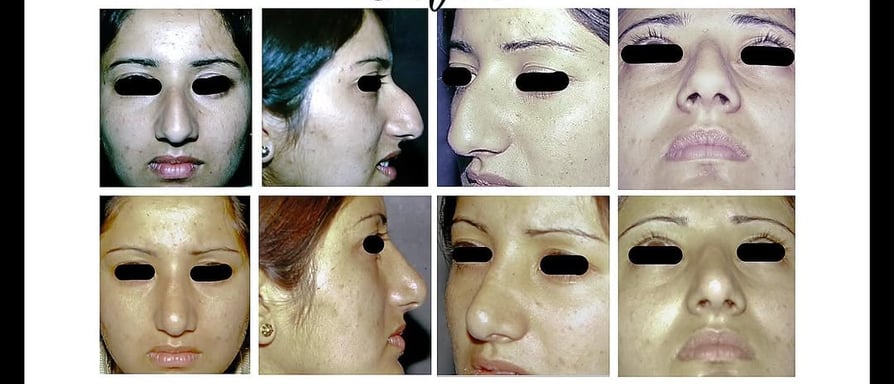
This surgery can address various concerns, such as the width of the nasal dorsum (the top of the nose), altering the height, removing humps, or correcting lateral deviations in the nose’s bridge. It can also change the angle between the nose and forehead, as well as between the nose and the upper lip. Additionally, rhinoplasty can be used to refine the nasal tip if it's bulbous, upturned, drooping, or crooked. Even the shape of the nostrils can be adjusted.
Rhinoplasty is very personalized to each individual, so the surgical steps will vary based on your specific needs.
What is the Ideal Age for a Nose Surgery?
Rhinoplasty can be performed on both younger and older individuals. However, it’s recommended to wait until after the age of 16 for females and 18 for males. By these ages, the nasal and facial structures are usually fully developed, ensuring the best results.
Local or General Anesthesia?
Rhinoplasty is typically performed under general anesthesia, so you’ll be fully asleep during the procedure.
What Are the Essential Steps of a Nose Surgery?
During the procedure, small incisions are made inside and just under the nostrils. Depending on your needs, adjustments are made to both the bony and cartilage structures of the nose. In some cases, additional cartilage may be taken from the ear or ribs. After reshaping the nose, the skin is gently re-draped, and the incisions are closed.
Once the surgery is completed, the nostrils are often packed, and a splint is placed on the nose to support the new shape.
What’s the Postoperative Care Like?
The nasal packing is usually removed within 24 hours, and the splint and sutures are taken out about a week later. You might experience some swelling and bruising for about a week to 10 days, but don’t worry—it’s completely normal. Most patients start to see noticeable results within 4-6 weeks.
You may feel some numbness around your nose for 2-3 months as your body adjusts to the changes.
Are the Results Long-Lasting?
Yes, rhinoplasty results are long-lasting! However, it’s essential to have a detailed consultation with an experienced plastic surgeon to discuss your expectations and ensure you're clear on what the surgery can achieve for you.
Location
Paras Hospitals
Hours: 9AM - 6PM
Contact: +91
Email: drsharmark@gmail.com
any questions ?